Adrianna Roszak, Meta Ads specialist at MTA Digital and author of the article on the 2026 changes to Meta campaigns
Blondynka w czarnej bluzce trzyma na rękach puszystego, białego psa rasy szpic miniaturowy na jasnoniebieskim tle.
Adrianna Roszak
Paid Social Specialist
12 min
Creatives
Meta Ads

Meta Ads changes in 2026: why just setting up a campaign is no longer enough

The Meta Ads changes in 2026 aren’t a cosmetic refresh of the Ads Manager interface — they’re a fundamental shift in how the algorithm works. Not long ago, plenty of campaigns could be carried by a solid setup. A well-narrowed audience, a sensibly set budget, a few exclusions, the right campaign objective — and you were good to go. For Meta Ads in 2026, that’s no longer enough. Not because settings have stopped mattering, but because they’ve stopped being the main source of advantage. Today’s ad systems analyse more data, filter messages faster, and make more and more decisions before an ad even reaches the right person.

What you'll learn from this article

  • why a “well-set-up campaign” alone no longer gives you the edge it once did,
  • what has actually changed in the Meta Ads environment, and in paid social more broadly,
  • why complexity hasn’t disappeared — it has simply moved from the interface to the backend,
  • why creative, data, and strategy now matter more than yet another round of micro-settings,
  • how the role of the campaign specialist is changing,
  • and what a “well-prepared campaign” really means today.


What actually changed in Meta Ads in 2026?

In short: The change isn’t about new features in the Ads Manager interface — it’s about complexity moving into the backend, where the AI operates. Meta’s algorithms (Andromeda, GEM, Lattice, Sequence Learning) now analyse hundreds of millions of signals in real time and filter ads before they even reach the auction. For marketers, this means a shift in emphasis from operational precision (precise targeting, micro-settings, fragmented structures) to strategic quality (clear creative, good data, sound test hypotheses).

There was a time when setup really made the difference

Let’s be honest about it: for years, the edge in paid social very often came down to operational precision. You had to separate the funnel stages well, keep an eye on your audiences, set exclusions, control placements, and build increasingly detailed campaign structures. That made sense, because algorithms worked differently, learned more slowly, and needed more manual steering.

In that model, the specialist was a bit like the operator of a complex machine. The better they knew the interface, the greater the chance they’d “squeeze” a better result out of the campaign. Today, that model is simply no longer enough.

💡 The problem isn’t that setup no longer counts. The problem is that setup alone isn’t enough to build an advantage.

The environment the campaign runs in has changed

This isn’t just a matter of new features in the interface. The shift runs deeper.

AI in marketing has stopped being an add-on and become part of the infrastructure that the entire advertising ecosystem runs on. Systems now have access to more signals, connect data from different sources faster, and decide earlier which ad makes the most sense for a specific user.

One of the key elements of this infrastructure is Andromeda — the AI engine that, since the end of 2024, has been changing the way Meta matches ads to users. We covered it separately →

This means a campaign no longer operates in as “manual” a world as it once did. More and more decisions are made automatically, in real time, and people have less influence over the micro level and more responsibility for what they feed into the system at the input stage.

Complexity hasn't disappeared. It has simply moved to the backend.

This is probably one of the most important changes to grasp.

There was a time when much of the complexity was visible in Ads Manager. That’s where you built fragmented structures, separate ad sets, separate audiences, separate funnel logic. Today that complexity hasn’t disappeared — it has simply moved to the backend, where the AI operates.

Meta is integrating its models ever more tightly and analysing the user journey as a whole, rather than as a series of manually separated stages. That’s why the interface may look simpler, but the game itself is no simpler at all. It’s just different.

In practice, this means it’s less and less about “hacking the system” and more and more about working with it. About giving it the right fuel: meaningful data, strong creative, clear messaging, and genuinely varied versions.


⚠️ This is an important shift in perspective: a simpler interface doesn’t mean a simpler campaign. It means a campaign that’s more demanding strategically.


A "well-set-up campaign" means something different today than it used to

And this is where a lot of people trip up, because they’re still using the old definition.

There was a time when a “well-set-up campaign” often meant: precise targeting, a thought-through structure, dialled-in placements, the right budget, and sensible optimisation. That still matters today, but it no longer works as a complete definition of quality.

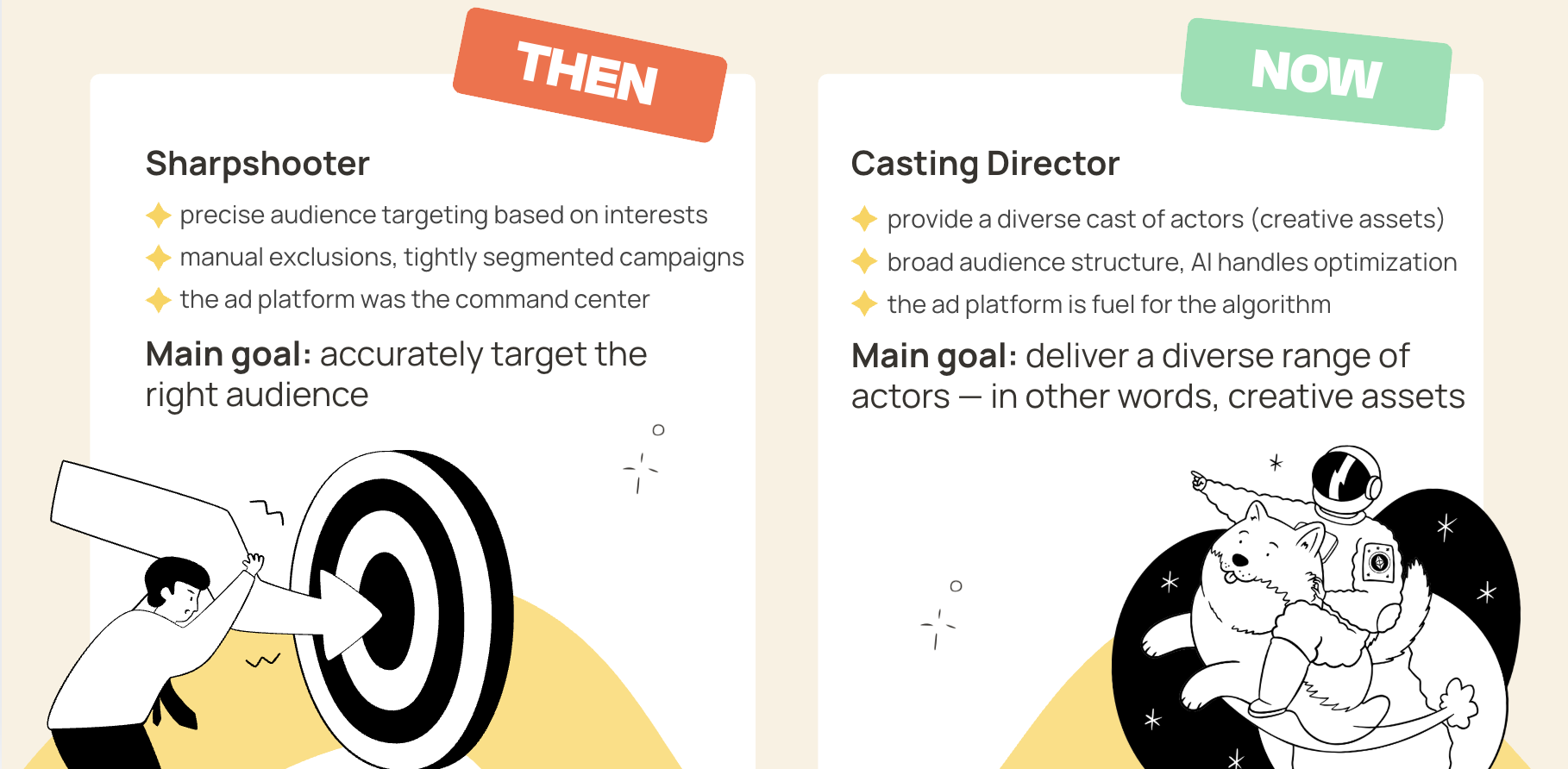
Meta campaign changes 2026 — comparing the marketer's old and new role in Meta Ads

What does a well-prepared Meta Ads campaign look like in 2026?

Today, a well-prepared campaign is more like one that:

  • has data and events correctly implemented,
  • isn’t needlessly fragmented,
  • gives the system room to learn,
  • includes creative that genuinely differs from one piece to the next,
  • and is built on a sensible testing strategy rather than guesswork.

This is a much broader understanding of “campaign setup” than it was just a few years ago. Today, setup isn’t only what you click in the interface. It’s also the quality of the signals the system receives from your creative, data, and structure. The centre of gravity is now shifting towards creative — which opens up a separate thread on creative strategy in Meta Ads.

Advertising is still a conversation between a brand and a person

And that, as it happens, hasn’t changed. No matter how advanced the algorithms get, an ad is still a moment of direct contact between a brand and a person. And that moment is very short.

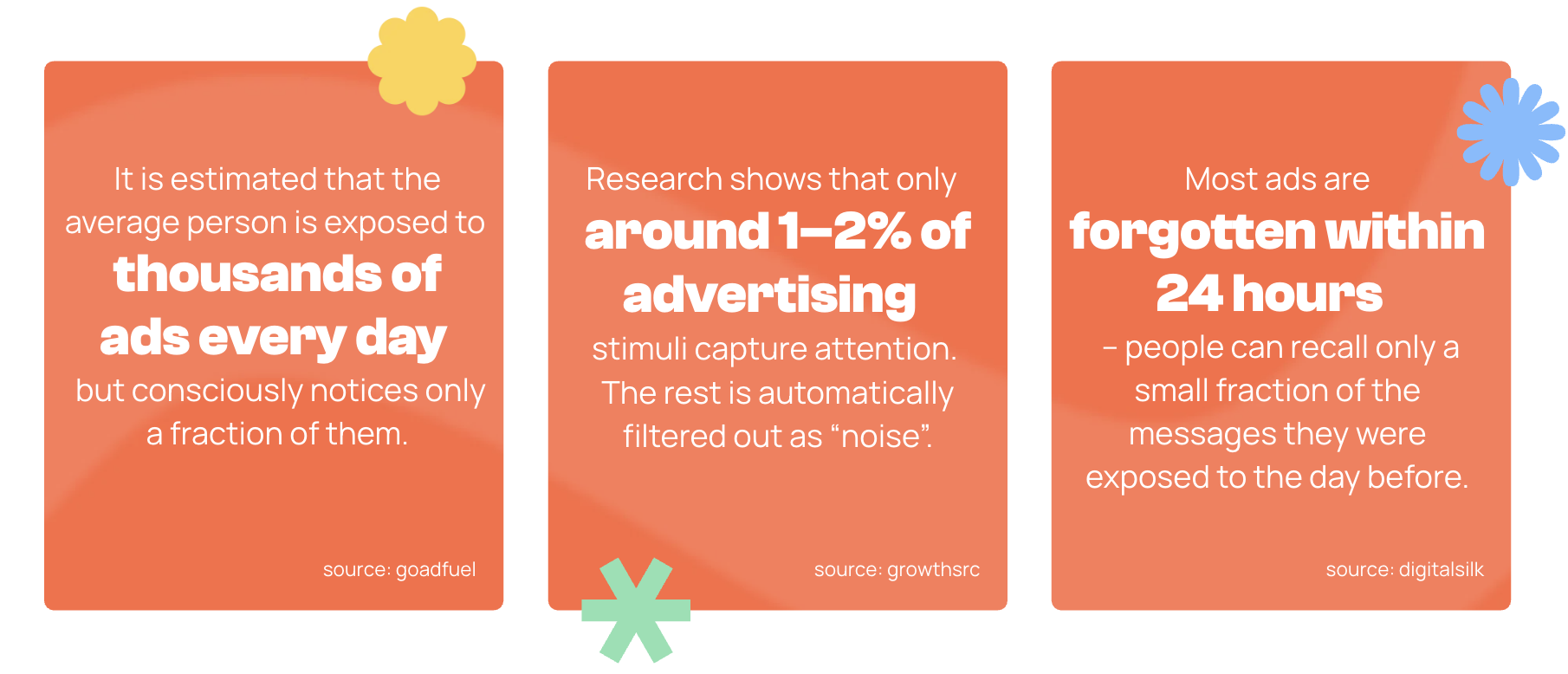
Meta campaign changes 2026 — why ads have to stand out amid the flood of messages
Sources: goadfuel; growthsrc; digitalsilk

If the creative doesn’t capture attention, name the problem, stir emotion, or make the point of the message clear, the campaign loses long before we even start analysing the results.

That’s exactly why a campaign being technically correct isn’t enough. You can have the right objective, a well-set budget, and broad reach, but if the ad doesn’t “do its job,” the system has nothing to optimise.


👉 A campaign can be set up perfectly. But if the message is weak, you’ll burn through your budget perfectly too.

A campaign today is a system of connected vessels

It’s no longer a solo race won by a single element. Objectives, budgets, data, structure, placements, formats, and creative all work together. Even the best-configured campaign won’t hold up if the ad doesn’t stop the viewer and add value to the whole system. Creative strategy gives each piece of creative a role: at different funnel stages, for different intentions, and for different levels of user awareness.

This matters a great deal, because many brands still treat creative as the “last step.” First the setup, then the media plan, and finally: “okay, let’s add some graphics.” But in the current model, that thinking simply doesn’t add up.

Creative isn’t an add-on to the campaign. It’s one of its core mechanisms.

Strategy is no longer optional. It's a prerequisite

Since systems are making more and more decisions automatically, what grows in importance on the human side is the thing the system won’t do on its own: strategy.

Creative strategy today isn’t about guessing which idea “will probably work.” Its role is to form hypotheses, organise the messaging, and design tests so that the resulting data actually means something. Only then can you answer the questions: what works, why it works, and how to scale it.

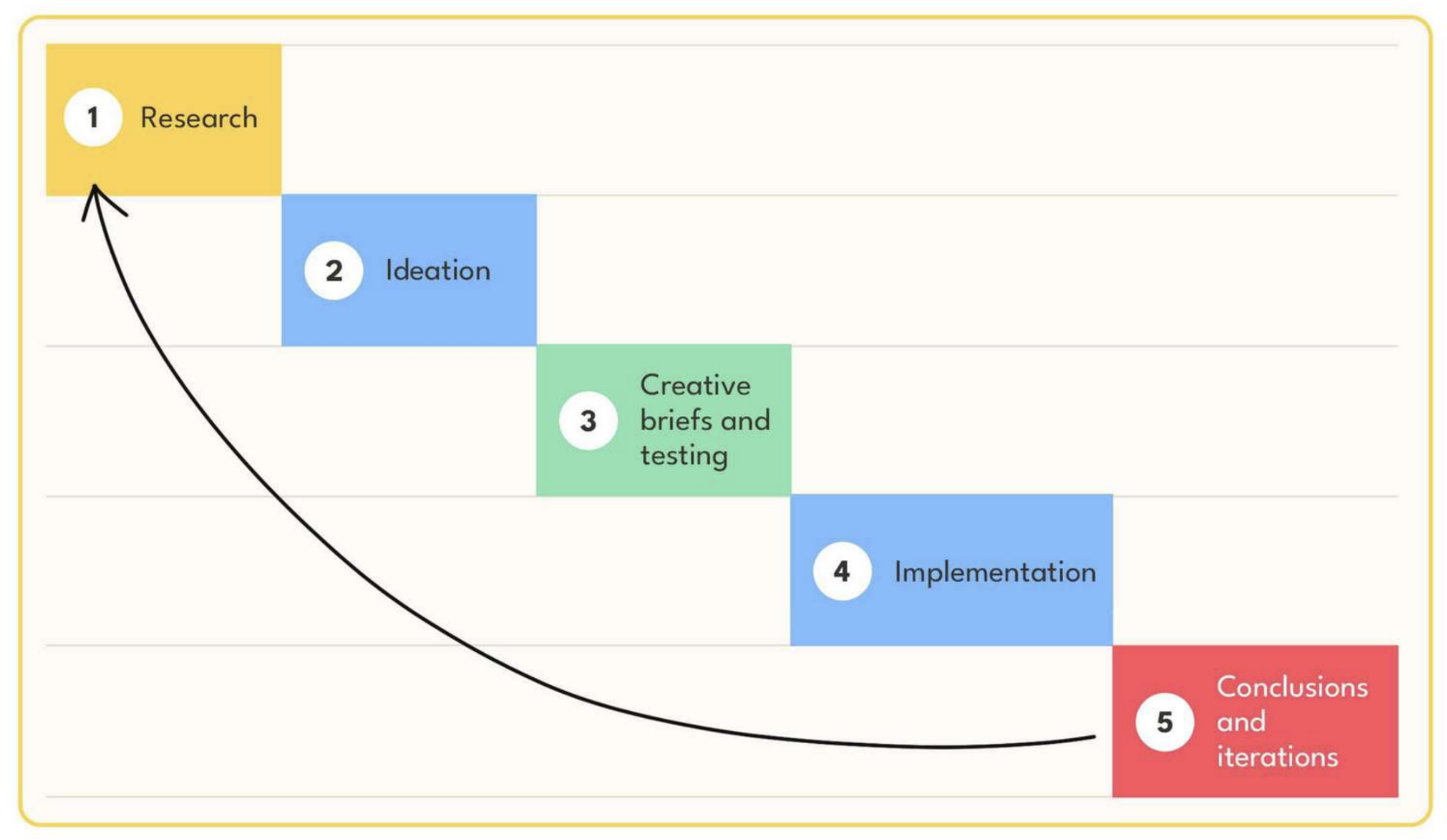
Meta campaign changes 2026 — testing and iteration strategy in Meta Ads


Creative strategy is a cycle:

Research → Concept → Production → Test → Insights → Iteration. And that captures today’s reality well. An effective campaign doesn’t start when you click “Publish.” It starts much earlier — with understanding the audience, the problem, the intent, and what we genuinely want to test.


💡 Without strategy, a campaign becomes a collection of random decisions. And randomness very rarely scales well.


Automation doesn't take the specialist's role away. It shifts it

In a world of AI, the role of the paid social specialist isn’t disappearing. It’s simply moving closer to the fundamentals. It’s less and less about manually adjusting every screw, and more and more about understanding strategy, designing sensible tests, making deliberate creative decisions, and being able to read data in context.

This means the specialist is no longer just a “campaign setter.” They’re someone who:

  • understands what signals they’re feeding the system,
  • can judge whether a campaign makes strategic sense,
  • knows how to connect performance with creative,
  • and knows how to draw insights from tests that genuinely affect the outcome.

In other words: less operator, more strategist.

What changedMeta Ads in the pastMeta Ads 2026
01
Targeting
Precise audiences, narrow interests, custom audiencesBroad + signals from creative — creative is the new targeting
02
Structure
Fragmented — many ad sets, separate funnels, micro-segmentationConsolidated — broader ad sets, less fragmentation
03
Role of creative
An add-on to the campaign, “decoration” made at the end of the processThe core mechanism for steering the campaign and a signal to the algorithm
04
Role of the specialist
Interface operator — a “campaign setter” in Ads ManagerStrategist + creative — designs tests, connects performance with creative
05
Algorithm
Slow, needs manual steering, learns in silosAndromeda — fast, predictive, ties data together across placements
06
Source of advantage
Campaign setup — operational precision, knowing the interfaceStrategy + creative + data — the quality of the signals you feed the system
Meta Ads in the past vs Meta Ads 2026 — six key changes in campaign logic

So what do you really need to "set up" today?

Exactly — if setting up the campaign is no longer enough, then what do you really need to set up?

Above all, you need to get the fundamentals in order:

  • the business objective,
  • the testing logic,
  • data quality,
  • a campaign structure without needless fragmentation,
  • the roles of your creative,
  • and the way you draw conclusions.

There’s one more thing on top of that: you need to know which moment in the buying decision you’re speaking to. Because a campaign starts to perform better when you’re not throwing random assets at it, but instead using messages designed for the different stages of audience awareness. Learn more about the 5 stages of customer awareness.

The biggest paradox? The more AI, the more the fundamentals matter

This is probably the best summary of the whole shift. The more automation there is in advertising platforms, the less advantage you gain from simply working the settings. But that doesn’t mean campaigns are getting simpler. If anything, it means the fundamentals matter even more: good strategy, the right message, sound hypotheses, well-organised tests, good data, and the ability to interpret results.

The algorithm can speed up selection. It can connect signals faster. It can find patterns a human would never spot in a spreadsheet. But it still won’t understand your brand, your audience, and your business goal for you.


✅ Today it’s no longer enough to set a campaign up well, because a campaign is no longer just a set of settings. It’s a system of decisions, data, creative, and strategy.

Do Meta Ads campaign settings not matter in 2026?

Of course they do. You still need to know what you’re doing in the interface, how to build a structure, how to read results, and how not to get in the system’s way. But the days when setup was the main source of advantage are simply coming to an end.

Today, the edge comes from something broader: from the quality of your signals, the quality of your thinking, the quality of your creative, and whether the campaign was designed as a sensible process rather than just a correctly clicked configuration. Because in a world of AI and automation, the winner isn’t the one who sets a few sliders best. The winner is the one who can combine technology with strategic thinking.

And if you’re not sure whether your campaign settings are aligned with how Meta Ads works now, get in touch — we’ll be glad to help!

About the author

Adrianna Roszak — a Meta Ads and TikTok Ads specialist with experience working with e-commerce brands. She builds ad campaigns that combine a technical approach to ads with a creative strategy grounded in testing and data. In her work, she focuses on making creative that responds to the real needs of audiences and works well with the algorithms of advertising platforms. She helps brands build effective, scalable advertising systems instead of one-off, random campaigns. Find her on LinkedIn.

Table of contents

See other articles

TikTok

TikTok Shop for e-commerce: how to enter smartly — and not end up underwater

TikTok Shop is now live in a lot of markets — mature and crowded in some, brand-new in others — and every so often e-commerce gets a channel everyone suddenly talks about. The pattern repeats: first curiosity, then a gold rush, then the quiet realisation that the winners weren't the loudest entrants but the ones who entered with a plan.
Illustration of a seller registering a TikTok Shop account step by step
TikTok

How to start selling on TikTok Shop – step by step

There's a moment in the life of every new sales channel when everyone's talking about it, nobody really knows it yet, and you have an irresistible urge to just register and see what comes of it. TikTok Shop is in exactly that moment. And honestly? The urge is well founded: the channel has potential, the barrier to entry can be surprisingly low, and the first well-prepared sellers gain a real edge while the competition is still deliberating.
Black-and-white illustration of a smartphone showing a balance of USD 79,541, with a piggy bank, scattered banknotes and falling dollar coins — a symbol of turnover versus what really remains after costs on TikTok Shop.
TikTok

TikTok Shop commission and costs – what really stays in your pocket?

There's a number that tempts you with its simplicity: selling price minus product cost. You type two values into a spreadsheet, out comes a lovely margin, and for a moment the world feels tidy. The trouble is that on TikTok Shop this formula has more characters than you'd expect – and several of them write themselves into the script without warning.

It’s time for your brand.
Click and let’s start growing together.