Creator affiliate on TikTok Shop: how to launch it and what to pay
Imagine you have a sales team that works purely on commission, creates its own content, builds its own reach, and you only pay when they actually sell something. Sounds like every sales department’s dream? That, in short, is affiliate on TikTok Shop, and one of the channel’s biggest advantages.
There’s a simple, human reason behind it: people don’t trust banners. They trust people. A recommendation from a creator someone has been watching for months works completely differently from an ad everyone has learned to scroll past. And it’s on that trust that the whole of affiliate stands.
What you'll learn from this article
- what creator affiliate on TikTok Shop is and how it works,
- why a creator’s recommendation sells better than an ad,
- how open collaboration differs from targeted collaboration,
- how much commission to offer creators,
- how a creator can earn from affiliate,
- which products affiliate works best for.
Affiliate on TikTok Shop at a glance
Affiliate on TikTok Shop is a model where you make products available to creators, and they promote them in their videos and LIVE streams in return for a commission on sales. You set it up in the affiliate panel (TikTok Shop Accelerate Center). You have two routes: open collaboration (products available to a wide pool of creators**) and targeted collaboration (selected** creators on specific terms). It’s best to combine both, and to build the commission into your margin in advance.
What affiliate on TikTok Shop is
Affiliate is a mechanism where a seller makes their products available to creators, and they promote them in videos or on LIVE streams. For every sale a creator generates, they’re due an agreed commission. The whole thing, from sharing your product catalogue, through setting rates, to settlements, you handle in the affiliate panel (TikTok Shop Accelerate Center).
The best part of this model is that the platform mediates all the communication and settlement between you and the creators. You don’t have to negotiate individual contracts, track who sold how much, or calculate payments by hand. You make products available and set the terms, creators make content, and the system links a sale to a specific creator and settles the commission. That’s exactly why affiliate scales so well: the more creators promote your product, the bigger the effect, and you don’t manage each one separately.

Why affiliate works
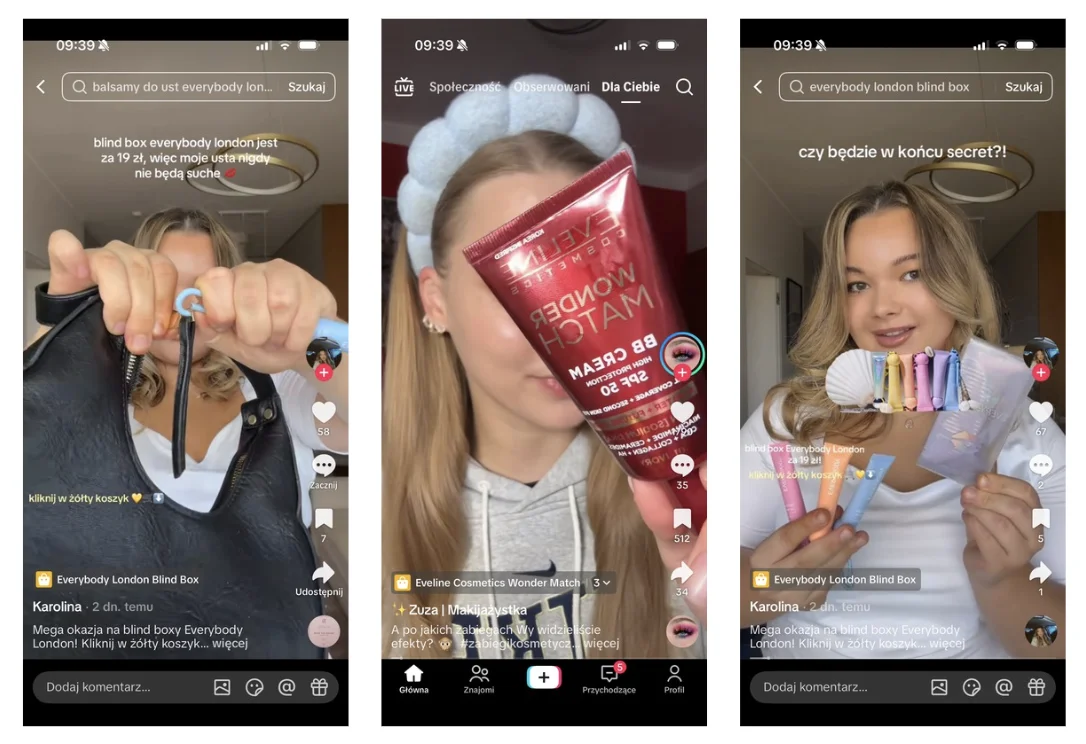
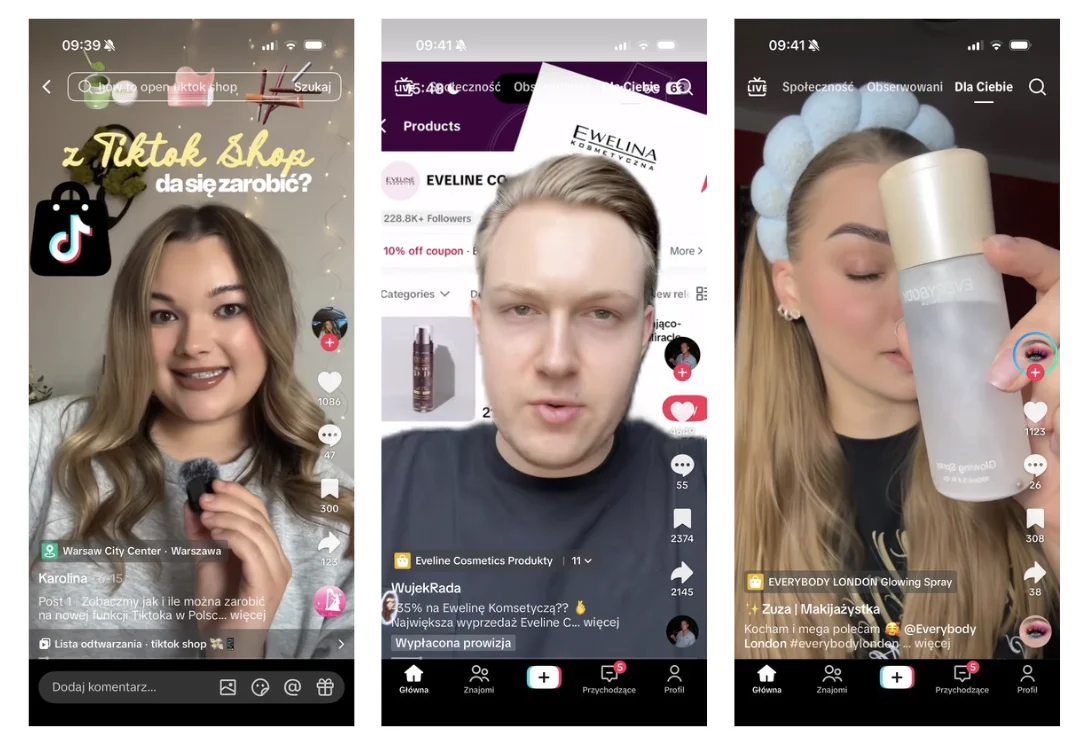
Let’s come back to that trust for a moment, because it isn’t a marketing cliché. A creator who shows your product in their video does something no ad will: they weave it into the context of everyday life. They show how they use it, what it goes with, what they think of it. The viewer isn’t watching a sales message, they’re watching someone they trust.
For some categories it’s the most natural form of selling imaginable. A cosmetic shown live on skin, a piece of clothing tried on and described, a gadget put through its paces, these are content pieces that sell, because they look like a recommendation from a friend rather than an ad.
Open vs targeted collaboration: two routes (ideally both)
You can run affiliate two ways. These aren’t “either or” options, the best results come from combining them:
| Model | How it works | Pros | Cons |
|---|---|---|---|
| Open collaboration | products available to a wide pool of creators | scale; you see who reaches for the product of their own accord | less control over content quality |
| Targeted collaboration | you choose specific creators and offer them terms | control, context, care for brand image | more time-consuming, smaller scale |
Open collaboration is a great start: you release the product into wide circulation and watch who takes an interest on their own. Sometimes it’s the best market test you can run, creators vote with their feet. Targeted collaboration works where a product needs the right context, education or particular care for brand image.
💡 The golden ratio: broad affiliate gives scale, working with selected creators gives quality and predictability. Start with open, then invite the best creators who show up of their own accord into direct collaboration.
How much to pay creators: three commission tiers
This is where the real skill begins, because commission is a two-way game. Too low, and it won’t interest creators, why would they promote something they’ll barely earn on? Too high, and it eats your margin. A three-tier model works well:
- Base commission – for broad affiliate (open collaboration). Attractive enough for the product to be considered at all.
- Raised commission – for selected creators you want to motivate further.
- Individual terms – for your best partners, the ones who genuinely deliver sales.
For simple, highly competitive products, a low commission simply won’t work, creators have plenty to choose from. For products with strong viral potential you can test higher rates, but always with one eye on the margin.
⚠️ Build the creator commission into the price before you launch affiliate. Otherwise every affiliate sale lowers a margin you didn’t plan for. How to calculate it, we break down in the piece on TikTok Shop commission and costs.
Which products affiliate works best for
Affiliate loves impulse products, the ones a creator can show naturally and a viewer can buy on the spur of the moment:
- cosmetics and beauty – almost the textbook example: high quality, a good margin, they look great in a demo, and the scale effect can be enormous,
- fashion and accessories – try-ons, styling, “here’s how I wear it”,
- gadgets and home products – a working demo does the job,
- products with an interesting use context – anything a creator can talk about meaningfully.
There are exceptions by category, for example food products have their own category restrictions, so before you build affiliate around them, check what’s allowed at all (more in the piece on product listings and categories).
Samples and PR packages: how to win creators over
A creator will more happily show a product they know and like. That’s why samples and PR packages are a well-working complement to affiliate: you send the product to selected creators, they test it, and if they take to it, they talk about it naturally. It’s an investment that, with the right choice of creators, can pay back many times over.
One condition: a PR package makes sense where the business model can carry it. With thin-margin products, handing out samples left and right quickly stops adding up, aim precisely, not in bulk.
Affiliate + live = the strongest duo
Affiliate delivers the best results combined with live streams. A creator hosting a LIVE with your products combines two of TikTok Shop’s strongest levers at once: the reach of the live and the credibility of a recommendation. If you haven’t yet read how the other half of the equation works, take a look at the piece on live commerce on TikTok Shop.
And what if you're a creator?
So far we’ve looked at affiliate through a seller’s eyes. But the same transaction has another side, and you don’t need a shop to earn from it.
As a creator you can, of your own accord, pick products from the affiliate catalogue, show them in your video or on a live, and take a commission on every sale that comes from your content. You don’t wait for a brand to “discover” you, you decide what fits your account, and you test what resonates with viewers. Sold something from your video? You’ve earned your cut.

The rule is simple and not at all cynical: the better you match the product to your audience, the more you’ll earn, because the recommendation sounds natural rather than a bolted-on placement. The creators who do best treat affiliate as a genuine recommendation, showing things they actually use and aren’t embarrassed by. Viewers can sense it, and trust, once dented, comes back more slowly than a commission.
What next?
Affiliate is a lever, but it works best alongside the rest of the channel:
- work out profitability with the creator commission included → TikTok Shop commission and costs,
- launch live, ideally with creators → live commerce,
- polish the listings creators will promote → product listings and categories,
- before you open your catalogue to creators, set up the feed and stock sync so affiliate doesn’t sell stock you don’t have on the shelf → TikTok Shop integration with e-commerce.
You’ll find the whole picture of the channel in the guide: TikTok Shop for e-commerce. And if you’re only just starting, begin with how to start selling step by step.
A short forecast to finish
We’ll allow ourselves a forecast, because we like to be clear. From our perspective, this market will saturate over time, and social media will simply become another set of shopping platforms, as naturally as search engines and marketplaces did before them. The line between “scrolling the feed” and “shopping” will keep blurring until it all but disappears.
And if we’re guessing right, in a few years one more thing will be added: people will tire of ubiquitous shopping on every screen. Then a viewer’s attention will get even more expensive, and trust even more valuable. And that’s the whole point of entering now. Affiliate stands on a creator’s relationship with their audience, and a relationship isn’t built in a week. Whoever builds their creator network while the channel is still young and receptive will enter the saturation phase with an advantage that can’t be bought at the last minute.
This is a forecast, of course, not an oracle, perhaps the market will take a different path. But if there’s even a grain of truth in it, better to catch this wave now than chase it later, when it’s already a touch too late.
FAQ
What is affiliate on TikTok Shop? A model where you make products available to creators, and they promote them in videos and on LIVE in return for a commission on sales. You set it up in the affiliate panel (TikTok Shop Accelerate Center).
How does open differ from targeted collaboration? Open collaboration makes products available to a wide pool of creators (scale, less control). Targeted collaboration is working with selected creators on specific terms (control, context). It’s best to combine both.
How much commission should I offer creators? Ideally in three tiers: base for broad affiliate, raised for selected creators, and individual for your best partners. The rate has to be attractive to the creator but built into your margin.
How does a creator earn from TikTok Shop affiliate? A creator picks products from the affiliate catalogue, shows them in a video or on a live, and for every sale generated by their content receives an agreed commission. They don’t need their own shop.
Which products does affiliate work best for? Impulse, visual products: cosmetics, fashion, accessories and gadgets with a good margin and an interesting use context.
Do I have to send creators samples? It isn’t mandatory, but PR packages help, a creator promotes a product they know more willingly and more naturally. Use them where the margin allows.
Does a creator need a large following to sell through affiliate? No. What counts is matching the product to the audience and real conversion, not reach alone. Smaller creators with an engaged, on-topic community often sell better than large accounts with a random audience, which is why it’s worth starting with open collaboration and watching who actually delivers.
About the author
Hubert Grygielewicz – A Paid Social Specialist with several years’ experience across domestic and international markets. He specialises in combining the technical side of ad accounts – structures, settings and optimisation – with testing creative approaches, checking how specific settings affect results. After hours he photographs concerts and festivals. Find him on LinkedIn.
See other articles


How to start selling on TikTok Shop – step by step